
Whole Life Insurance and Infinite Banking: How the Two Actually Connect
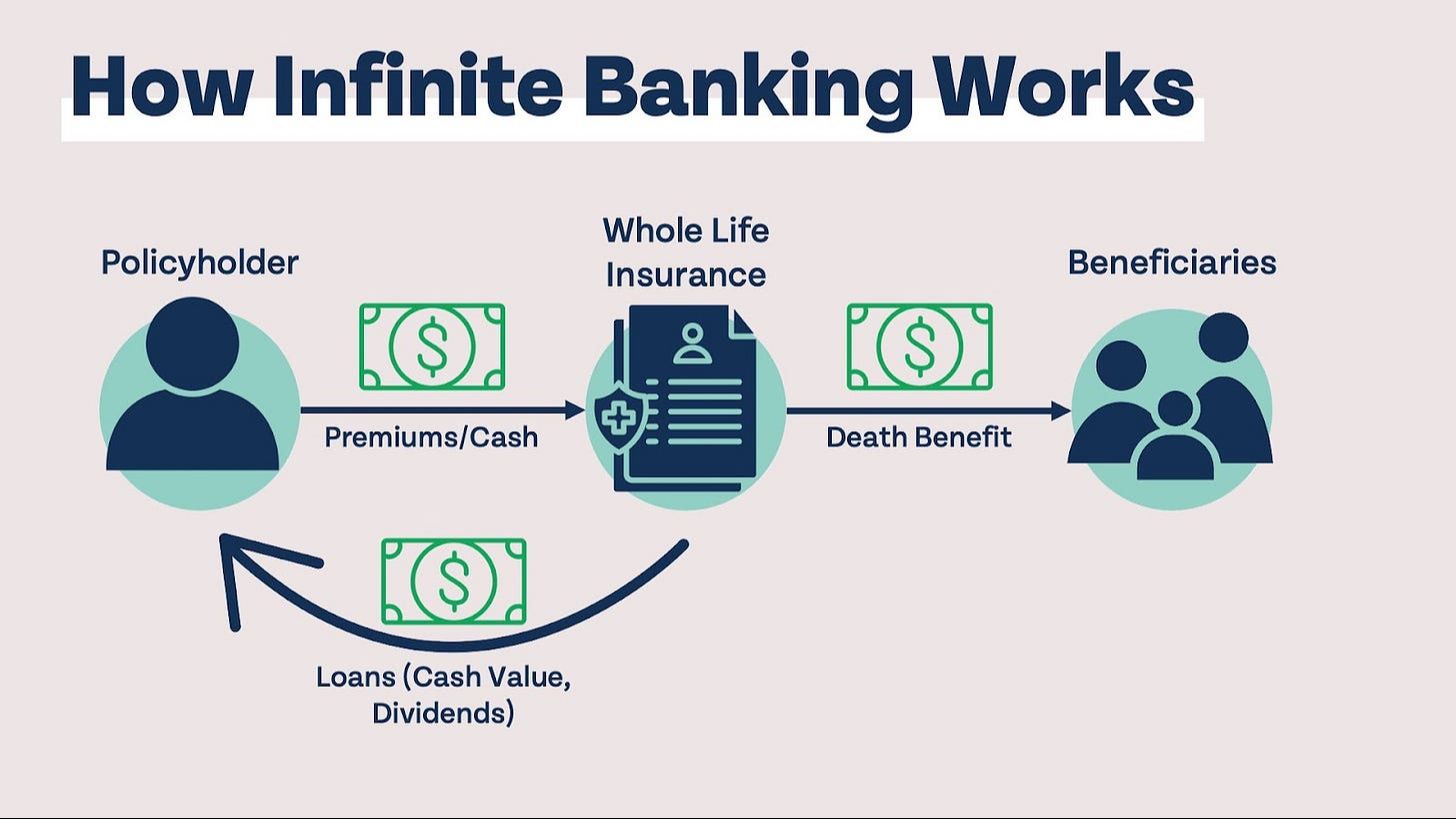
People often ask whether whole life insurance and infinite banking are the same thing. They aren't. One is a financial product, while the other is a strategy that uses that product. In most cases, you can't implement infinite banking without whole life insurance, but understanding the difference will help you avoid a lot of misleading sales pitches.
Whole Life Insurance Is the Container, Not the Strategy
Whole life insurance is a type of permanent life insurance. Like any life insurance policy, it pays a death benefit to your beneficiaries. Unlike term insurance, however, it also builds cash value over time at a guaranteed minimum rate that isn't tied directly to market performance.
That cash value is what makes the policy useful during your lifetime. Depending on how it's designed, you can borrow against it and, in some cases, make withdrawals.
Term life insurance works differently. It provides protection for a fixed period but doesn't accumulate cash value. That's one of the reasons term insurance costs less. Every premium goes towards the insurance itself, whereas part of a whole life premium is building an asset you may be able to use later.
Where Infinite Banking Comes In
Infinite banking is a strategy built around that cash value. Instead of applying for a bank loan to cover a car purchase, business expense or home improvement project, you borrow against the value held within your policy.
Although the insurer charges interest on the loan, the cash value may continue growing at the same time, depending on how the policy has been structured.
This is why the infinite banking strategy only works with certain kinds of whole life policies, specifically ones designed with strong early cash value growth, often through paid-up additions riders.
By comparison, a policy designed primarily to maximise the death benefit while keeping premiums as low as possible usually won't provide the same flexibility. The concept matters, but the policy design matters just as much.
Why the Marketing Around This Gets Overstated
A lot of "infinite banking" content promises guaranteed wealth-building or positions itself as a replacement for traditional saving and investing. That's an oversell. The guaranteed growth in a whole life policy is real, but it's modest compared to what long-term market investing can produce over the same stretch of time. The value of infinite banking isn't outperforming the market — it's having a source of liquidity and financing control that doesn't depend on a bank's approval, your credit score, or market timing.
It's also worth being direct about cost. Whole life premiums are higher than term premiums for the same death benefit, and the first several years of a policy build cash value slowly because of underwriting and acquisition costs. This approach rewards people who fund it consistently for a decade or more. It's a poor fit for anyone who might need to cancel the policy early for cash.
How This Connects Back to Velocity Banking
Some people combine infinite banking with a velocity banking strategy.
For example, they may use a HELOC to accelerate mortgage repayments while funding a whole life policy to build long-term liquidity. The two strategies serve different purposes, and neither depends on the other.
Households with sufficient cash flow may find that combining the two creates a clearer distinction between paying down debt and building long-term financial flexibility.
Deciding If This Fits Your Situation
Before pursuing this, it helps to look at your existing debt, your emergency savings, and your longer-term goals. Infinite banking works best as an addition to a solid financial foundation, not a substitute for one.
Our team can walk through actual policy illustrations and honest numbers on our services page, not just the concept. If you have questions specific to your finances, get in touch here, read more on our blog, or find us through our Google Business Profile.
