
The Infinite Banking strategy is a way of using a specially designed whole life insurance policy as your own source of financing. You build cash value inside the policy, borrow against it when you need money, and pay it back on your terms. You become the lender instead of relying on a bank to approve you. My Infinite Banking page covers how I set this up with clients.
That’s the idea in one paragraph. The details are where people get lost, so I’m going to strip the jargon out and walk through it the way I’d explain it to a friend.
Where the idea came from
The concept was made popular by Nelson Nash, who wrote about it in his book Becoming Your Own Banker. His point was simple. You finance everything you buy. Either you pay interest to someone else, or you pay cash and give up the growth that money could have earned. Infinite Banking is his answer to that problem: build a pool of money you control and route your financing through it.
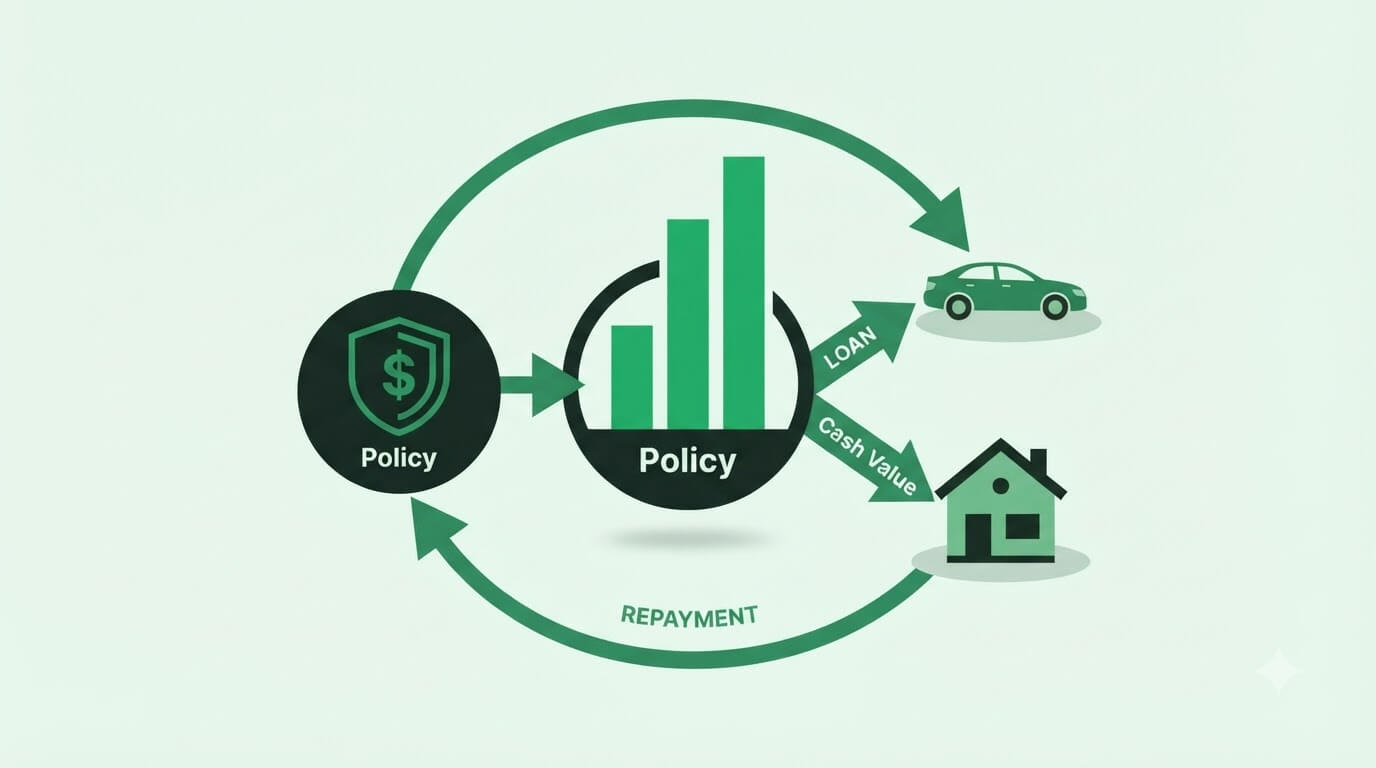
How the Infinite Banking strategy works in plain English
- You buy a dividend paying whole life policy from a strong mutual insurance company.
- The policy is designed to build cash value quickly, usually with a small base premium and extra money going into a paid-up additions rider.
- Over time, the cash value grows through guaranteed growth and dividends.
- When you need money for a car, a down payment, or an emergency, you take a loan from the insurance company, using your cash value as collateral.
- Your cash value keeps growing while the loan is out, because you borrowed against it instead of withdrawing it.
- You pay the loan back on a schedule you set, which frees up your borrowing room for next time.
That fifth point is the part most people miss. When you pull money out of a savings account, that money stops earning. With a policy loan, the full cash value stays in the policy and keeps compounding.
How the policy has to be built
Not every whole life policy works for this. I always recommend one of the major mutual companies, many of which have been around for about 160 years and carry strong credit ratings. The design matters just as much as the company. I set policies up with a minimum insurance premium and a maximum paid-up additions rider, sometimes called a cash dump-in, so more of each dollar goes to cash value early on. I also don’t endorse IUL policies for Infinite Banking. If you want the longer version of why the policy type matters, read how whole life insurance and Infinite Banking connect.
| Feature | Savings Account | Bank Loan | Infinite Banking Policy |
|---|---|---|---|
| Who approves you | No approval needed | The bank, based on credit and income | No approval, you borrow against your own cash value |
| What happens when you use the money | It stops earning | You owe the bank on its schedule | Cash value keeps growing while the loan is out |
| Repayment terms | Not applicable | Fixed by the lender | Flexible, set by you |
| Death benefit | None | None | Yes, passes to your family |
| Early years | Full access right away | Access if approved | Cash value builds slowly at first |
What Infinite Banking is not
A lot of content online oversells this. So let me be clear about a few things.
- It isn’t a way to beat the stock market. The growth in a whole life policy is real and steady, but modest compared to long term market investing.
- It isn’t fast. These policies take years to build meaningful cash value, and early premiums are weighted toward insurance costs.
- It isn’t a short term savings account. If you cancel in year two, you will likely get back less than you put in.
The real value is control. You get a source of liquidity that doesn’t depend on a bank’s approval, your credit score, or what the market did last month. I’ve written about the Infinite Banking mistakes that cost people thousands, and most of them come from treating the policy like something it isn’t.

Is it right for you?
Infinite Banking works best as an addition to a solid foundation. Before you start, look at your existing debt, your emergency savings, and whether you can fund premiums consistently for years. If you’re still carrying high interest debt, it may make sense to deal with that first. My guide on how to become your own banker goes through the setup in more detail.
Find out if an Infinite Banking policy fits your plan
We’ll look at your cash flow, your goals, and real policy illustrations so you can see honest numbers before you commit to anything.
Talk With DenzelFrequently Asked Questions
Can I use any whole life policy for Infinite Banking?
No. The policy needs to be designed for early cash value, usually with a paid-up additions rider and a dividend paying mutual company. A policy built only for the death benefit won’t give you the same flexibility.
How long before I can borrow from my policy?
Many well designed policies allow some borrowing in the first year or two, but the amount is limited early on. Borrowing capacity grows as the cash value grows.
Do I have to pay the policy loan back?
You aren’t forced onto a fixed schedule, but paying it back is what keeps the system working. Unpaid loans and interest reduce your cash value and the death benefit your family receives.