
Neither wins every time. Extra mortgage payments are simpler and lower risk. Velocity Banking can pay off debt faster when your cash flow is steady and you can manage a line of credit with discipline.
Every homeowner eventually asks how to pay off a mortgage faster. Two answers keep showing up in comment sections and YouTube videos: a line of credit strategy and the plain old extra-payment method. Both aim at the same finish line. How they get there, and what they ask of you along the way, is where they stop being interchangeable.
Key takeaways
- Extra payments are simple and low risk, but they depend on whatever surplus you have each month.
- Velocity Banking uses a line of credit to move cash faster. It needs steady cash flow and discipline.
- If your HELOC rate is close to your mortgage rate, the advantage shrinks and you take on variable-rate risk.
- The bigger difference is what each method demands of you, not just the speed.
- If your cash flow is thin or uneven, extra payments still get you there with less to manage.
What Extra Mortgage Payments Actually Do
Making extra payments is the strategy everyone already understands, because there’s nothing to learn. You send an additional amount toward principal: monthly, quarterly, whenever you have it. Your lender applies it directly to the balance. Less principal means less interest accrues going forward, and the loan shortens.
There’s no new account to open, no variable rate to track, and no risk of using a line of credit incorrectly. The catch is that you’re limited to whatever true surplus is sitting in your checking account after bills clear. For many households, that surplus shows up in small, irregular bursts: a tax refund, a bonus, a slow month with lower expenses. The payoff timeline moves, but it moves slowly.
What Velocity Banking Changes
This strategy uses a HELOC or a personal line of credit as the tool instead of a savings habit. You draw a lump sum from the line and apply it directly to your mortgage principal. Then you run your regular income and expenses through that same line of credit for a stretch of time. Check how your lender calculates interest on the line. If it uses the average daily balance, keeping that balance low, even for part of the month, can reduce the interest you’re charged. A mortgage balance stays large and moves slowly by comparison.
The mechanics are laid out in more detail in my breakdown of the payment method most people start with. The short version: it’s not free money, and it’s not magic. It’s a math trick that only works if your cash flow is stable enough to keep cycling through the line without maxing it out.

Extra Payments vs a Line of Credit, Side by Side
| Factor | Extra Mortgage Payments | Velocity Banking |
|---|---|---|
| New account required | No | Yes, a HELOC or PLOC |
| Interest rate exposure | Your mortgage rate only | Mortgage rate plus a variable line rate |
| Speed of principal reduction | Limited to leftover cash each month | Can move faster if cash flow is consistent |
| Effort and monitoring | Minimal, set it and forget it | Ongoing, balances need to be watched monthly |
| Risk if income drops | Low, you just stop sending extra | Higher, an underused line can carry a balance longer |
| Best fit for | Disciplined savers who want simplicity | Households with strong, steady monthly cash flow |
Where the Real Difference Shows Up
People tend to compare these two strategies on speed alone, but the bigger difference is what each one demands of you. Extra payments ask for discipline with your checking account. The other strategy asks for discipline with a line of credit. That is a different skill, and for many people a harder one. A line of credit doesn’t stop you from spending the way a paid-off mortgage does.
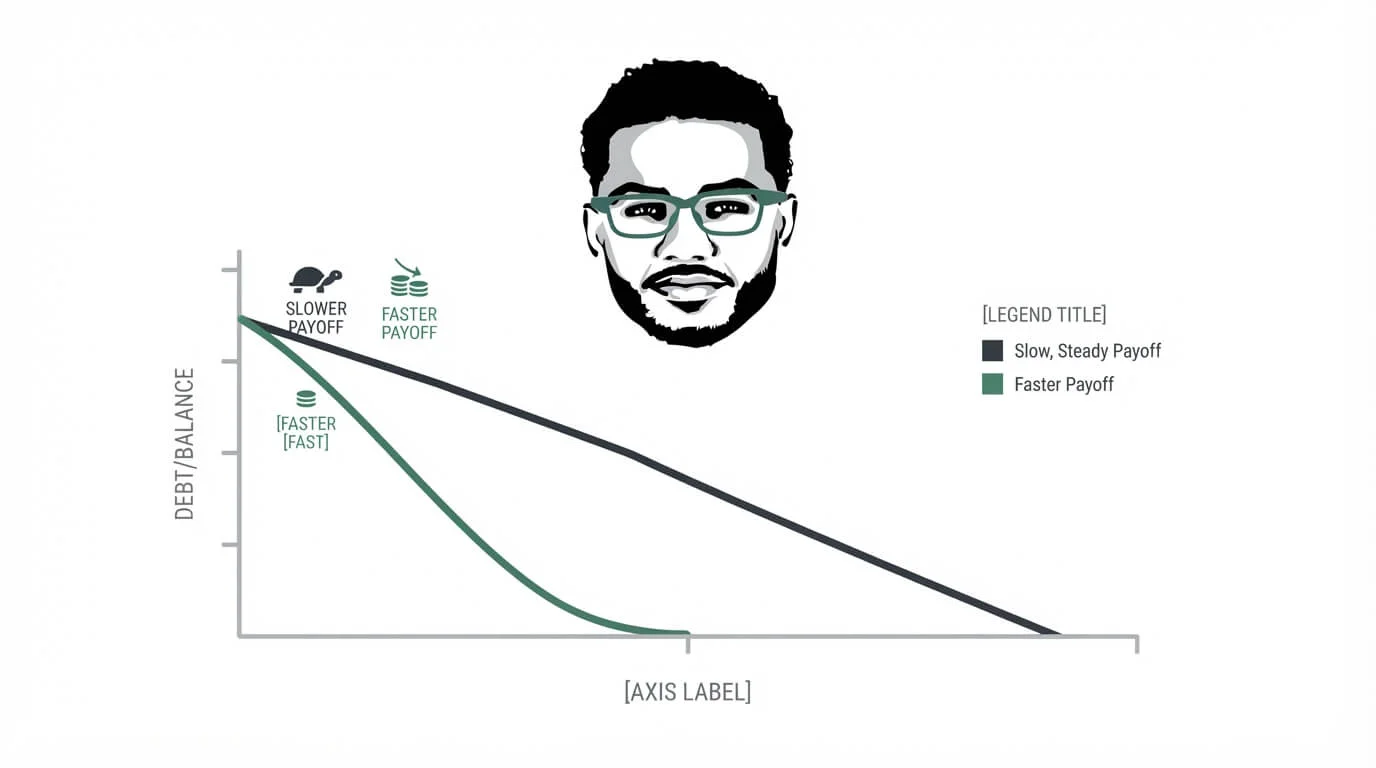
The rate spread matters too. If your HELOC rate is close to your mortgage rate, the advantage shrinks fast, and you’re taking on variable-rate risk for a smaller payoff. If the spread is wide and your income is predictable enough to keep the line’s balance low most of the month, the math tends to favor the line of credit approach.
Which One Actually Fits You
There isn’t a universal winner here, and I’d be lying if I told you there was. Here is a quick way to sort yourself:
Extra payments may fit you if:
- Your cash flow is thinner or less consistent.
- You don’t want to manage a second account.
- You want a simple plan with little to monitor.
Velocity Banking may fit you if:
- Your income arrives in steady, predictable amounts.
- You are comfortable actively managing a line of credit.
- The gap between your HELOC rate and your mortgage rate is wide.
If your cash flow is thinner or less consistent, or you don’t want to manage a second account, extra payments will still get you there. The road is longer, but there is a lot less to manage.
Frequently Asked Questions
Can I switch from extra payments to Velocity Banking later?
Yes. Some homeowners start by paying extra toward principal, build equity, and then open a HELOC once they have enough equity to make the line worthwhile.
Do I need perfect credit to qualify for a HELOC?
No, but your credit score directly affects the rate and line amount you’re offered, which changes whether this strategy makes sense for your situation.
Is Velocity Banking riskier than just paying extra?
It carries more moving parts and variable-rate exposure, so it requires more attention. It isn’t inherently reckless, but it isn’t passive either.
This article is educational and is not financial, tax or legal advice. A HELOC is secured by your home, its rate can change, and missed payments can put your home at risk. Talk to a qualified professional about your situation.
Ready to Find Out If You Can Pay Off Your Mortgage Faster?
Every household’s numbers are different. See how the Velocity Banking strategy could apply to your mortgage, your income, and your timeline.
Explore Velocity Banking Strategies