
The Velocity Banking Blueprint: How to Actually Use It to Pay Off Debt Faster
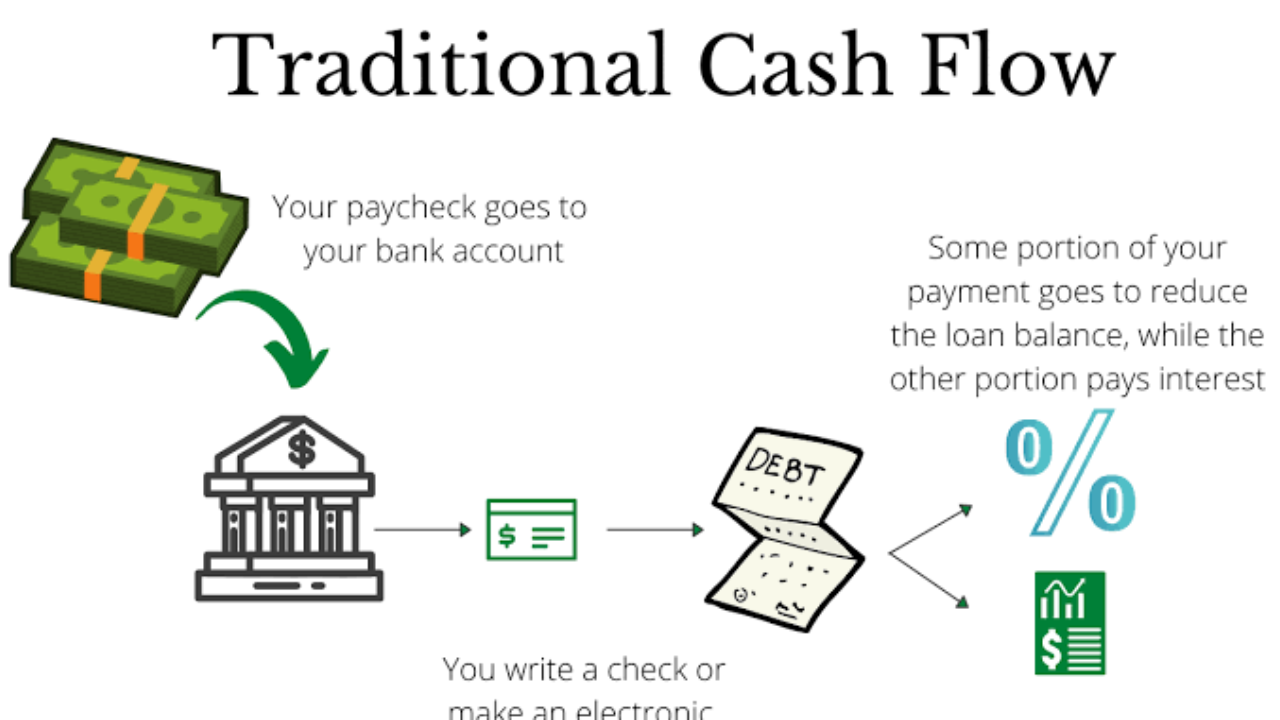
If you've read What is Velocity Banking? And How Do I Start?, you already know the basic idea: run your income through a line of credit instead of a checking account, and let daily-calculated interest work in your favor instead of the bank's. This post skips the intro. You're here for the mechanics — the actual steps, the actual math, and honestly, where this strategy stops making sense.
I'll say the same thing I say to every couple I sit down with: this is not a secret the banks are hiding from you. It's math, applied on purpose, with discipline behind it. Nobody's numbers are identical, so treat everything below as an illustration of how the pieces fit together, not a promise of what yours will look like.
The Chunking Method, Step by Step
"Chunking" is the engine under the hood of Velocity Banking. Instead of sending the mortgage company $2,000 a month for the next 27 years, you push a large lump sum — a chunk — against the principal all at once, using a line of credit. Then you spend the next few weeks or months paying that line of credit back down with your normal income before you do it again.
Here's what that looks like with simplified, illustrative numbers:
- You draw a chunk. Say you have $10,000 available on a HELOC. You use it to pay down $10,000 of your mortgage principal in one shot. That $10,000 immediately stops accruing mortgage interest.
- Your income moves through the HELOC instead of a checking account. Your paycheck lands in the HELOC, which drops the balance you're carrying — and since HELOC interest is usually calculated on your average daily balance, every day that balance is lower saves you interest.
- Your bills still get paid. You draw back out of the HELOC for expenses as they come due, same as you would from a checking account. The difference is the order — income hits the balance first, expenses draw against it second, instead of sitting untouched in checking while your mortgage keeps accruing interest on the full amount.
- You repeat the cycle. Once you've paid the HELOC chunk back down (often a matter of a few months, depending on your cash flow), you draw another chunk against the mortgage and start over.
The mechanism works because a HELOC calculates interest daily on whatever balance you're carrying that day, while a mortgage keeps charging you interest on the full remaining balance regardless of how briefly your money passes through your account. You're not creating money. You're changing when your dollars do their job.
Choosing the Line of Credit That Starts This Off
Most people run this strategy on a HELOC because it's secured against home equity, which usually means a lower rate and a bigger available balance than an unsecured line. As of early August 2026, Bankrate's national survey put the average HELOC rate around 7.44%, with some lenders offering adjustable rates closer to 7.16% and actual offers ranging anywhere from roughly 6% up to 18% depending on credit and equity. Those numbers move — check current rates before you commit to anything, and don't treat any figure in this article as a quote from a lender.
A personal line of credit is the other option, and it matters most for renters or anyone without meaningful home equity yet. It's typically unsecured, so the rate runs higher and the limit runs lower, but you don't need to put your house up as collateral to start. I go deep on this comparison — draw periods, qualification differences, a full side-by-side table — in a companion article on HELOC vs. personal lines of credit for this exact use case. For now, the short version: home equity usually wins on rate and size, a personal line of credit wins on accessibility.
"Isn't This Just Moving Debt Around?"
Yes, and I'd argue that's the point, not the flaw. You're not creating new debt — you're relocating existing debt into a structure where your own cash flow does the interest-saving work instead of a fixed 30-year schedule doing it for you. The objection usually comes from people who've only ever seen debt paid off one way: minimum payment, same amount, every month, for decades. Velocity Banking asks you to actually manage your money instead of letting a repayment schedule manage it for you.
I hear two other objections almost every week. First: "This only works if you own a home." Not true — it changes which tool you use, not whether the strategy works. Second: "If this worked, banks would offer it themselves." Banks profit from you following their amortization schedule. They have zero incentive to teach you a faster way out. I've written a full breakdown of these myths, along with the real risks worth taking seriously — adjustable rates, the discipline this requires, and who this genuinely isn't built for — in a dedicated article if you want the deeper version.
Where This Fits Your Bigger Plan
Velocity Banking is a debt-acceleration strategy. It's not a wealth-building strategy on its own, and I want to be direct about that distinction. Once your mortgage or high-interest debt is under control, the question becomes: where does that freed-up cash flow go next? For a lot of the families I work with, the answer is Infinite Banking — building a private banking system through a properly structured whole life policy that lets you become your own lender going forward. The two strategies aren't competing with each other. One clears the runway. The other builds the plane. If you want the fuller picture of how that second piece works, Infinite Banking is worth reading next.
This is where "building your Kingdom" stops being a slogan and starts being a plan. Stewardship isn't just paying things off — it's deciding, on purpose, what your family's money does after the debt is gone.
What Actually Changes, and When
I get asked for a timeline constantly, so here's an honest, illustrative range based on the pattern I see most often. Your actual results depend entirely on your income, your expenses, and how much true cash flow you're working with each month.
- 6 months in: You've likely made two or three chunk cycles. The mortgage balance has dropped more than it would have from six months of standard payments, but it doesn't feel dramatic yet. This is the stretch where discipline matters most, because the payoff isn't visually obvious.
- 1 year in: The gap between "where I'd be on the standard 30-year schedule" and "where I actually am" becomes clear. Most people can see, on paper, several years shaved off their projected payoff date.
- 3 years in: For households with consistent positive cash flow, a mortgage that would have taken decades can realistically be within striking distance of paid off — sometimes fully paid off, depending on the loan size and how aggressively the chunks have run.
None of that is a guarantee. It's a pattern. Your household's numbers are the only thing that determines your actual timeline.
When Velocity Banking Isn't the Right Move
I'd rather tell you this upfront than let you find out the hard way. This strategy is not for you, at least not yet, if:
- Your monthly cash flow is negative or break-even. If there's nothing left over after expenses, there's no income to redirect through the line of credit, and the whole mechanism stalls before it starts.
- You're not comfortable tracking numbers closely. This isn't "set it and forget it." You need to know your balances, your interest accrual, and your draw amounts on an ongoing basis.
- You'd be tempted to treat the line of credit as extra spending money. The strategy only works if the line of credit is a pass-through for your income, not a source of new purchases.
- Your credit isn't strong enough yet to get favorable terms. A HELOC or personal line of credit with a high rate and small limit erodes the advantage this strategy depends on.
If any of that sounds like where you are right now, that's not a dead end — it's usually a "get your four numbers in order first" conversation. Income, expenses, debt, and cash flow. Everything else builds from there.
Where to Go From Here
The mechanics aren't complicated once you've seen them laid out. What's harder is applying them to your actual mortgage, your actual HELOC offer, your actual household budget — and that's where the numbers stop being illustrative and start being yours. Curious where Velocity Banking could take your plan? Let's map it out together.
