
Real estate investing and Velocity Banking tend to attract the same kind of person: someone comfortable using leverage on purpose, not by accident. Once that same investor adds a funded whole life policy into the mix, the two tools start working together in ways that go beyond simply paying off a mortgage faster. This is the piece for anyone applying the full Velocity Banking and Infinite Banking framework to actual deals — down payments, renovations, and the leverage decisions that come with combining both tools on an investment property.
Why Real Estate Investors Are Drawn to Both Strategies
Investors already think in terms of capital sources and leverage, so both strategies fit a mindset that’s already there. Velocity Banking’s chunking method appeals because it treats a line of credit as a tool for compressing interest and accelerating equity, not just a place to park an emergency fund. Infinite Banking appeals for a related but different reason: it builds a private pool of capital that isn’t subject to a bank’s underwriting cycle, which matters a lot when a deal needs to move fast.
Put together, the two strategies give an investor two separate levers — one for paying down what’s already owned faster, and one for funding what comes next — without waiting on a lender’s timeline for either.
There’s also a portfolio-level reason this combination appeals to investors specifically, more than to someone paying off a single primary residence. An investor with multiple properties is already managing several mortgages, several rate environments, and several sources of cash flow at once. Having one tool that compresses interest on existing debt and a second tool that supplies capital without a new underwriting cycle each time gives that investor more control over timing than relying on a bank’s approval process for every move.
Using a HELOC or PLOC for a Down Payment or Renovation via Chunking
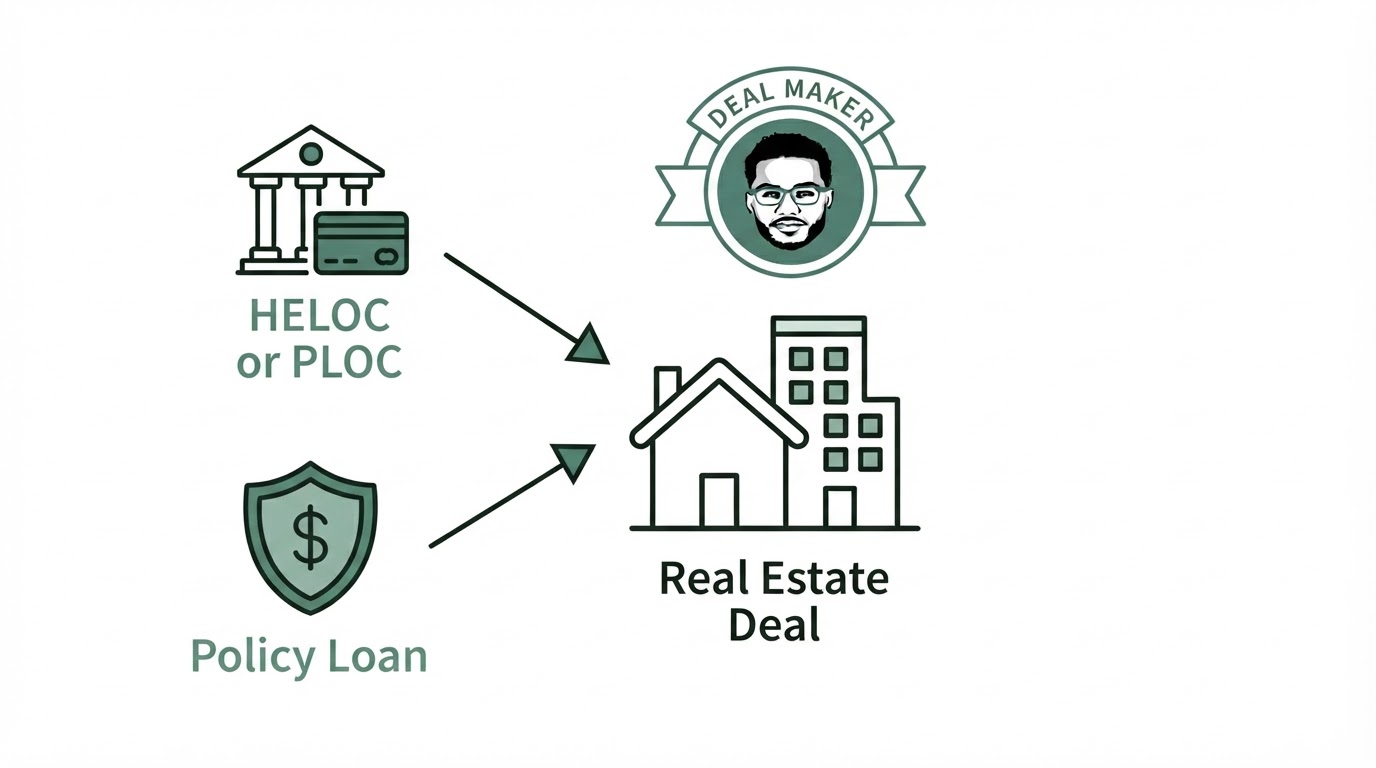
The chunking method isn’t limited to a primary mortgage. Some investors use a HELOC or a personal line of credit (PLOC) the same way against a rental property — running rental income and other cash flow through the line to accelerate paydown on that property’s own mortgage faster than its amortization schedule allows. Others use the line more directly, drawing against it to fund a down payment on a new acquisition or to cover a renovation budget, then paying it back down before drawing again for the next deal.
Rates on these lines move with the broader market and are typically higher for investment property than for a primary residence, since lenders view rental property debt as higher risk. Bankrate’s ongoing HELOC rate survey is a reasonable starting point for checking where national average rates stand before comparing them against what a specific lender quotes for an investment property line.
| Use Case | HELOC / PLOC | Policy Loan |
|---|---|---|
| Down payment on next property | Common, subject to lender approval and LTV limits | Possible once cash value is sufficient, no lender approval needed |
| Renovation budget | Common, draws as work progresses | Possible, flexible draw with no project documentation required |
| Speed to access funds | Days to weeks after initial approval | Often days, no new approval needed per draw |
| Affects lender debt-to-income calculations | Yes | No |
| Available before you’ve built up equity or cash value | Depends on existing home equity | No — requires time in force first |
Using Policy Loans as a Flexible Capital Source for Deals
Once a policy has meaningful cash value, it becomes a source of deal capital that doesn’t touch a lender’s underwriting process at all. That matters most in competitive markets, where being able to move on a property without waiting for a HELOC draw approval or a refinance to close can be the difference between winning a deal and losing it to someone with cash in hand.
This isn’t free capital, and it isn’t unlimited. The loan still needs to be repaid, and the amount available is capped by what the policy has actually accumulated. Investors who use this well tend to treat the policy as one component of a broader capital stack, not a replacement for traditional financing on larger deals.
Where this shows up most often in practice is the gap between finding a deal and closing on it. A seller motivated to move quickly, or a competitive bid situation, rewards whoever can move capital fastest — and a policy loan, once available, moves faster than almost any bank product because there’s no new approval needed each time you draw against it.
Balancing Leverage: How Much Is Too Much When Combining These Tools
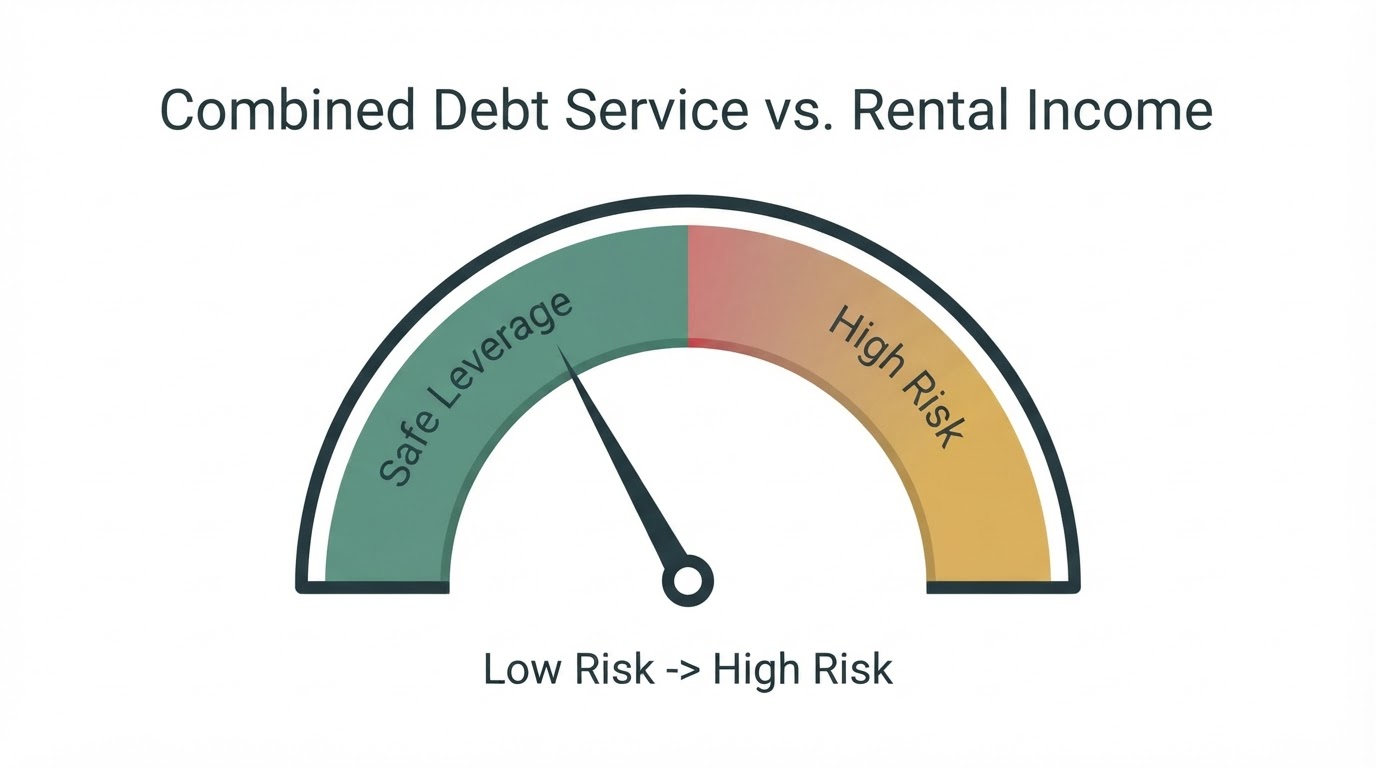
This is where discipline matters more than in almost any other part of the combined framework. Running a HELOC balance on one property, a policy loan against the same or a different property’s down payment, and a primary mortgage on top of it all can add up to more combined debt service than it first appears, especially if rental income softens or a renovation runs over budget.
- Track total combined debt service across every line of credit and policy loan outstanding, not just the primary mortgages on each property.
- Keep a cash flow cushion that assumes at least one property sits vacant or under-earns for a stretch — leverage stacked on optimistic rent assumptions is the most common way this goes wrong.
- Don’t let policy loan balances creep upward across multiple deals without paying any of them down — a policy loan is flexible, not free of consequence if left unmanaged.
What to Model Before Using Either Strategy on an Investment Property
Before drawing on a HELOC or a policy loan for a specific property, model the deal with both financing sources included in the numbers, not layered on afterward. That means projecting the property’s cash flow with the added debt service from whichever source you use, stress-testing what happens if a rent increase doesn’t materialize on schedule, and confirming your available cash value or credit line actually covers the full amount you’re planning to draw — not just the initial estimate before renovation costs run over.
All rate ranges and examples above are illustrative only, not quotes, projections, or promises tied to any specific lender, carrier, or property. Investment property financing terms vary by lender and change over time. Confirm current rates and your specific policy’s loan provisions before acting, and consult a qualified professional about your situation.
Frequently Asked Questions
Do I need an existing policy before I start real estate investing this way?
No, but a policy with real cash value takes years to build. Most investors start with a HELOC or PLOC and introduce policy loans as a capital source once the policy has matured.
Can I use a policy loan on a property I don’t personally own yet?
Yes — a policy loan is unsecured by any specific property. It’s simply cash you can direct toward a down payment, renovation, or any other use once it’s disbursed.
Is combining a HELOC and a policy loan on the same deal risky?
It can be if the combined debt service isn’t modeled carefully against realistic rental income. Used deliberately, with a cash flow cushion, it’s a common approach among experienced investors.
How do I know if I’m over-leveraged across multiple properties?
If your combined debt service — mortgages, HELOC balances, and policy loans together — leaves no cushion for a vacancy or a slow month, that’s a sign to pay down before adding more.
Ready to Model This Against a Specific Property?
Real Estate Investing with Velocity Banking works differently on a duplex than it does on a single-family rental, and differently again depending on how much cash value is already built up in your policy. Let’s map it out together.
Book a Strategy Call